AI dashboards in 2026: which mode fits, and how to tell
What AI dashboards actually became in May 2026, the two operating modes hiding inside the category, and the semantic-layer test that decides which one fits.
For: Heads of Data, CTOs, and operators at mid-market firms choosing between adding AI to an existing BI stack or replacing parts of it
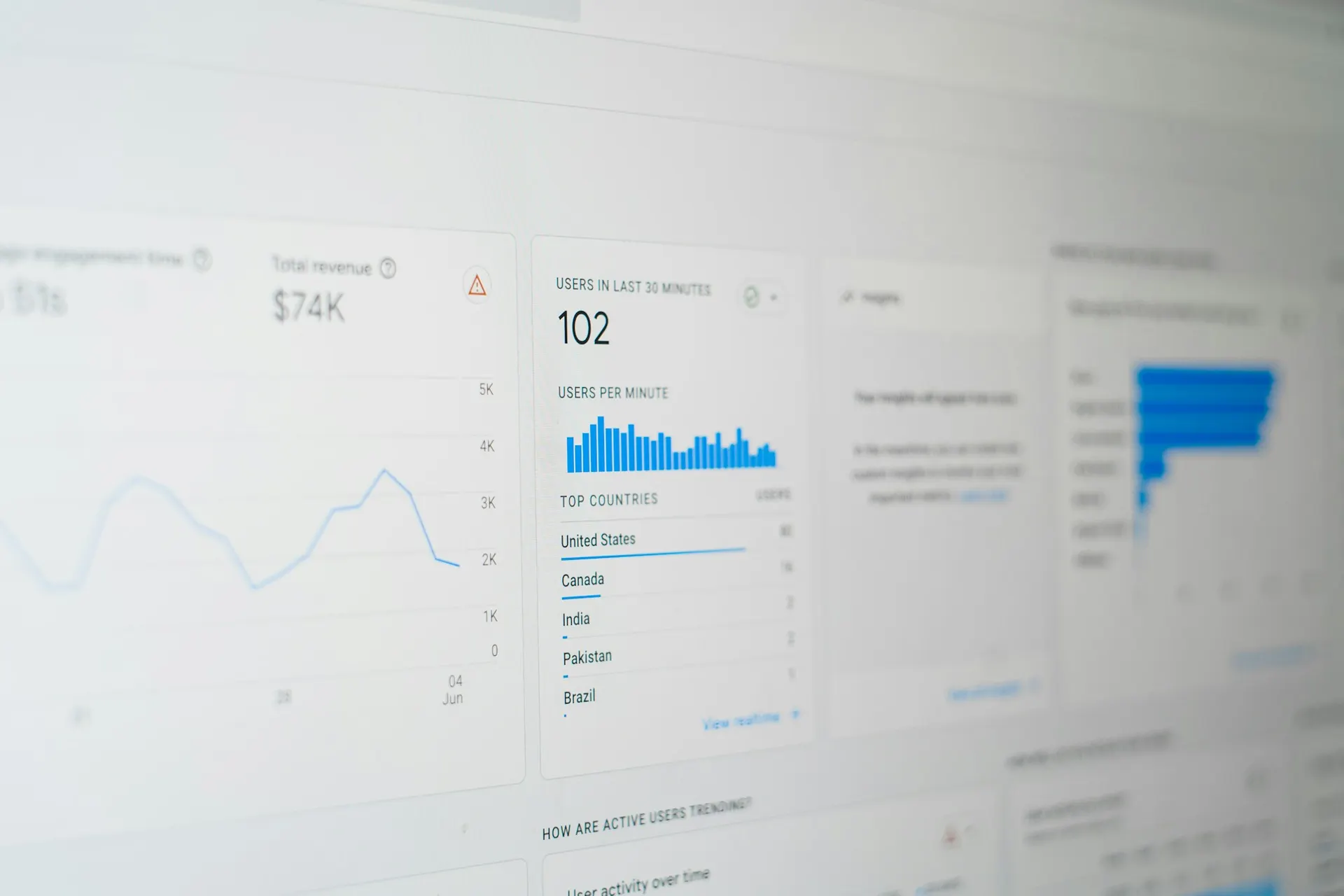
Mid-market data leads keep arriving at the same question in 2026. A February 2026 Ask HN thread (widely quoted since) put it bluntly: "if the goal is autonomous agents, why are we still shipping dashboards?" The honest answer in May 2026 is that the dashboard did not die. It split. Most buyers cannot tell yet that they are choosing between two products with the same name.
The buyer language gives the split away. The phrase "agentic washing" surfaced in a December 2025 techinformed round-up of data-leader predictions, naming vendors that rebrand basic automation as agents, and it stuck. Operators on HN distinguish "chat vs dashboard" and "ask vs view." Practitioners have started using "fail-open" (from the dbt Labs benchmark below) for tools that confidently return wrong numbers. None of that language existed in mid-2024. The category is moving fast enough that the vocabulary is still catching up.
What follows is what AI dashboards actually became in 2026, the two operating modes hiding inside the category, why they fail in opposite directions in production, and the one test that decides whether either of them is safe to put in front of your operators today.
Two operating modes, in plain terms
Group the vendors that come up in any AI dashboard procurement conversation by what they do, not by how they pitch themselves.
The first mode is a natural-language (NL) layer on top of an existing BI (business intelligence) stack. ThoughtSpot Sage, Tableau Pulse (folded into Tableau Next in April 2025), Power BI Copilot, Sigma's Ask Sigma, Looker with Gemini. The interface is "ask a question in English, get a number plus a chart back, with the underlying query traceable." These tools depend on a pre-curated semantic model. Your dbt metrics layer, your ThoughtSpot worksheet, your Power BI semantic model. The AI does not invent the metric. It picks one that has already been defined.
The second mode is an agent that does the analyst's work end-to-end. Hex Magic (the April 2025 Hashboard acquisition now ships as a one-prompt agent-to-dashboard workflow as of April 2026), Julius, Snowflake Cortex Analyst (now wrapped by Cortex Agents and surfaced inside Snowflake Intelligence), Databricks Genie, and ThoughtSpot Analyst Studio (which absorbed Mode in early 2025). The interface is closer to "ask a question, the agent writes Python or SQL against your warehouse, runs it, iterates if the result looks off, returns a narrative answer with a notebook attached." These tools can work without a semantic layer because they generate code on the fly. They are also, for the same reason, much harder to trust in May 2026.
That is the split. NL on top of an existing BI stack on one side. Agent that replaces large parts of the analyst's pipeline on the other side. Different artefacts (a chart vs a notebook), different operating models (governed vs exploratory), different failure modes.
Fail closed vs fail open
The failure-mode difference is the part of this category that gets glossed over in vendor demos. It is the most load-bearing fact about the choice.
dbt Labs published a controlled benchmark in April 2026 running the same LLMs (large language models) against the same 11 analytical questions in two modes: text-to-SQL over a raw warehouse schema, then the same questions resolved through the dbt MetricFlow semantic layer. With Claude Sonnet 4.6 the semantic-layer mode beat raw text-to-SQL 98.2% to 90.0% on correctness. With GPT-5.3 Codex the gap was 100% to 84.1%. The numbers matter; the qualitative finding matters more. The semantic-layer mode fails closed: it throws an error rather than returning a plausible wrong answer. The raw-schema mode fails open: it returns a confident answer that may be wrong.
The same shape shows up in BIRD-Interact 2026, the academic conversational text-to-SQL benchmark. GPT-5 hits 8.67% on the constrained conversational variant (c-Interact) and 17.00% on the agentic variant (a-Interact) of the same underlying tasks. Agentic completes more open-ended questions; reliability for both is still poor in absolute terms.
The practical translation is straightforward. If you put an NL-on-BI tool in front of a CFO, the worst case is "the chart did not render, here is an error message." If you put an agentic analyst in front of a CFO, the worst case is "here is a confidently wrong number that you presented to the board." Which failure mode your org can live with is the first cut of the decision.
The semantic-layer test
The best predictor of whether either mode works in your org is the maturity of your semantic layer. Not the LLM brand or the vendor.
A semantic layer, in the sense this article uses the term, is the published definition of how your business measures itself: what counts as revenue, which deal stages count as pipeline, how active customers are bucketed, which expense categories are operating versus capital. In a modern data stack it lives in dbt MetricFlow or Cube or LookML. In a Microsoft stack it lives in the Power BI semantic model or Fabric's OneLake metric layer. In ThoughtSpot it lives in worksheets and Liveboards.
AtScale's 2025 NLQ benchmark on Snowflake Cortex Analyst makes the point as cleanly as the data gets. The same questions against the raw warehouse score 16% correctness. Add Cortex's built-in semantic context and it goes to 54%. Add a governed semantic layer and it goes to 100%. dbt's April 2026 benchmark made a parallel observation: model choice mattered less than expected. The semantic layer was the variable.
If your most important business metric has more than one definition in active use, neither operating mode is safe in production yet. The NL-on-BI mode will return inconsistent answers depending on which semantic model the question hits. The agentic mode will return whichever number it can compute from raw tables, which is whichever assumption the LLM happened to make on that pass.
The audit you need is whether your most important business metric has one published definition that anyone actually uses. If the published definition does not exist, or exists and is ignored, fix that before evaluating vendors.
Yes, the category is converging
The honest counter to everything above is that the split between the two modes is dissolving in real time, and a Q4 2026 buyer may see one product where this article describes two.
Tableau folded Pulse into Tableau Next and added agents in April 2025. Hex acquired Hashboard in April 2025 and in April 2026 shipped an end-to-end prompt-to-agent-to-dashboard workflow that genuinely spans both modes inside one product. Snowflake Cortex Agents now wrap Cortex Analyst so the same surface can be either a governed NL query or an autonomous decomposition. Sigma deliberately ships Ask Sigma and Sigma Agents as separate products inside the same platform precisely because the company sees the split as load-bearing. Gartner's February 2026 Market Guide for Agentic Analytics treats both ends as one market.
So why does the operating-mode framing still matter today?
Because the operational gap between vendor marketing and product behaviour is still wide. A ThoughtSpot Spotter session and a Hex Magic agent thread produce different artefacts and fail in different ways in May 2026, regardless of how both vendors describe themselves. The convergence is real on the slide deck and still absent from the production environment. The decision you make this quarter should be based on what the tool does today, not on the analyst-category language the vendor would prefer you use.
The convergence does matter for one thing: planning to revisit the decision in a year. Build whatever you build with the assumption that the line between governed NL and autonomous agent will get blurrier through 2027.
A two-axis decision frame
The decision is rarely "do we buy AI dashboards or not." Two axes do most of the work.
Axis one is semantic-layer maturity. Has the org agreed definitions for its dozen most important metrics, are those definitions published in a place anyone can read, and does anyone actually use them. If yes, you can credibly evaluate NL-on-BI tools (governed mode is your default). If no, neither mode is safe yet.
Axis two is profit-impact, which is the question we set out in Redesigning the boring middle: if the workflow being changed by an AI dashboard is not freeing the headcount you were going to spend, the tool is paying for a productivity feeling rather than a P&L (profit and loss) line. Managers saving 20 minutes a week is the kind of result that gets a tool defended in performance reviews. Avoiding the junior analyst hire you were going to make next year is the kind that gets it onto the P&L.
Plot a candidate decision on both axes. Semantic-layer mature plus a real headcount or pipeline impact is the only quadrant where buying any AI dashboard pays back inside a year. Semantic-layer immature means "fix the layer first." Headcount-impact thin means "do nothing for now."
What to do in May 2026
For the head of data or CTO at a mid-market firm in May 2026, the order of operations matters more than the vendor pick.
First, audit the semantic layer before evaluating any AI tool. Pick three of your most quoted metrics, ask three different teams to define them, and see if the answers agree. If they do not, no AI dashboard will fix that, and several of them will make the disagreement invisible inside confident prose.
Second, pick the operating mode by failure tolerance. Audit-aware finance and ops reporting buys you NL-on-BI mode (fail-closed). Exploratory research, ad-hoc analysis, and discovery work buys you agentic mode (fail-open, but bounded to a notebook a human reviews).
Third, do not over-commit on vendor choice this quarter. Every major vendor is shipping in both modes by the end of 2026; the meaningful lock-in is your semantic layer, not the chat surface. Pick the surface that fits today; keep your semantic layer portable.
If you want a 45-minute call to run those three steps against your actual stack and tell you which mode (or whether either) is the right move this quarter, that is on /contact. If you want the broader buy-versus-build framing on vendor AI in general, the Xero JAX, Sage Copilot, and partner-build post has the shape of the analysis applied to accounting tools.
The shape of the question changed in 2026. The dashboard now ships in two operating modes inside a converging category, and the test that decides which one works for you is the same test that decided whether the old dashboards worked: whether your business agrees on what its numbers mean.
Tagged